Revolutionary Drug Delivery: How Nasal Nanoparticles Target Glioblastoma with Magnetic Precision
News1
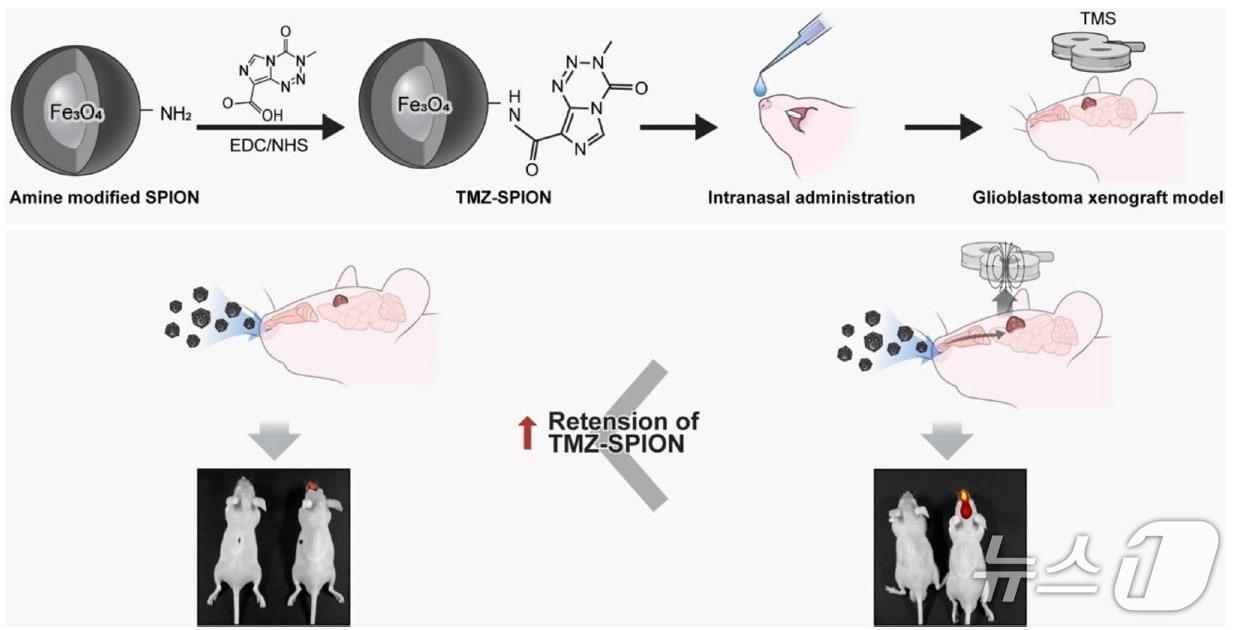
Schematic diagram showing the synthesis of TMZ-SPION and its intranasal administration to a glioblastoma xenograft mouse model. The graphic illustrates that intranasal delivery increases the retention of TMZ-SPION in the brain tumor site, demonstrating the therapeutic effect of prolonged survival in animal models. (Image provided by St. Mary's Hospital)
The research team, which developed an anti-cancer nanoparticles delivery technique through the nose, consists of Prof. Seungho Yang (Seoul St. Mary's Hospital/Left), Prof. Sung-Min Park (POSTECH/Center), and Prof. Won Jong Kim (POSTECH/Right). (Image: St. Mary's Hospital)